What to expect
GLP-1 side effects: what's common, and how they're managed.
Stomach side effects like nausea are common with semaglutide and tirzepatide, mostly in the first weeks and while the dose is going up. Dr. Carroll can hold or lower your dose if they're bothering you.
Before anything else: tell your surgeon
These medications slow stomach emptying, and there have been reports of stomach contents remaining despite normal fasting instructions. Any surgery, endoscopy, or procedure involving sedation is a reason to mention it — well before the day, not the morning of.
The label's serious warnings
These medications carry a boxed warning about thyroid C-cell tumors seen in rodents, and they aren't for anyone with a personal or family history of medullary thyroid carcinoma or MEN 2. The labels also carry warnings about pancreatitis, gallbladder disease, and kidney injury from dehydration. Dr. Carroll goes through the ones that apply to you.
What the manufacturers' own trials report
In the large trials that led to these medications being approved, nausea was among the most frequently reported effects. Vomiting, diarrhea and constipation were common as well. The rates differ between the two medications and rise with the dose, which is one of the reasons the dose matters so much.
Two things are equally well documented and get much less attention. Almost all of those effects were mild or moderate. And the great majority of people who experienced them stayed on treatment — only a small proportion stopped because of side effects.
Severe digestive reactions do happen, but they're uncommon, and overall serious adverse events in the trials were not more frequent than with placebo. A few histories rule these medications out before any of this matters, which is worth reading first — see whether treatment is right for you.
How the dose is handled
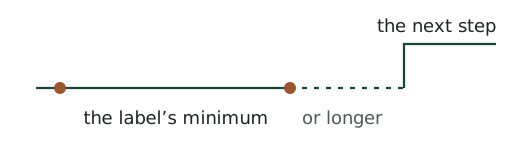
Start low
Move in small steps
Settle where it works
Everyone responds to these medications differently, so no one can promise how treatment will feel for you. What Dr. Carroll will do is move at your pace and adjust your dose whenever you need.
Want to talk it through first? Call 407-894-9663 · Book a visit
Common questions
Will semaglutide or tirzepatide make me nauseous?
Does feeling sick on semaglutide or tirzepatide mean it is working?
What can I do about nausea and other side effects?
Care provided by George W. Carroll, MD, Florida license ME48111.
Clinical content on this page is drawn from the physician-verified practice record of George W. Carroll, MD (Florida license ME48111) · Last updated September 2026
Ask about the parts that worry you
Your first visit is free, and it's the place to bring exactly these questions.
Mon–Fri 9:00 AM – 5:00 PM